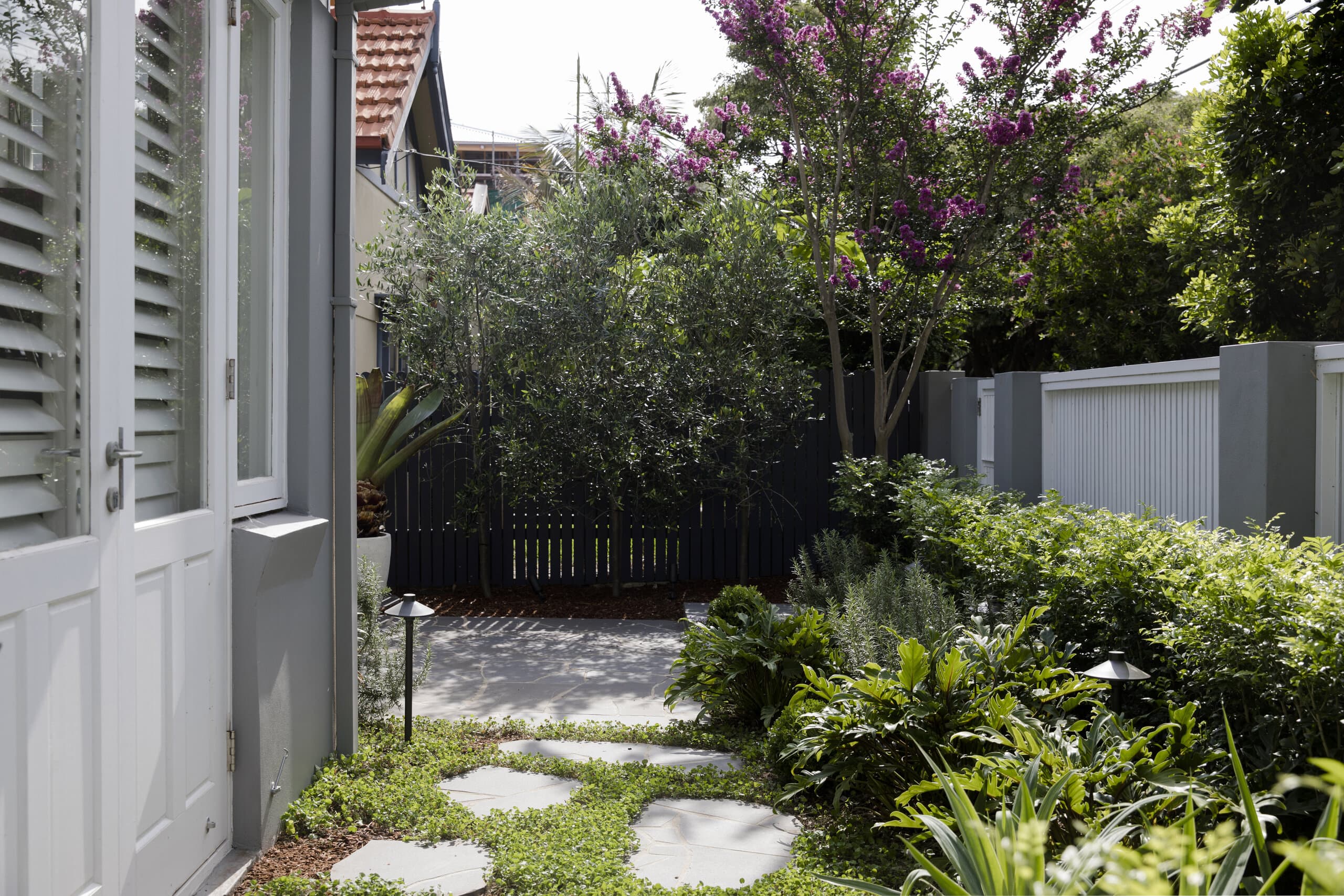
A newly landscaped garden may look finished on handover day, but below the surface it is only beginning to settle in. Plants are extending roots beyond their original rootballs, turf is knitting into the soil, mulch is starting to break down and irrigation needs to be adjusted as the seasons change.
The first year is the establishment period. What happens during these months has a lasting effect on how well the garden copes with heat, dry weather and normal use later on.
Successful establishment is not about following one rigid watering timetable. It is about observing the garden, checking the soil and responding before small issues become larger ones.
Begin with the handover information
Before changing irrigation settings or adding products, read the plant and lawn care document and irrigation manual supplied at handover. Together, they explain how to care for the new planting and turf, operate the irrigation system and manage the garden during establishment.
Keep these documents somewhere accessible and note who to contact if a valve, dripper or sprinkler is not working. You should also take photographs on handover day so you have a clear reference for spotting settlement, plant losses or changes in mulch depth later.
A garden designed for its site will contain plants with broadly compatible needs, but it will still have small differences in sun, wind, soil depth and drainage. A bed beneath an eave may remain dry after rain, while a low point only a few metres away may hold water.
Water according to the soil, not only the calendar
New plants need more consistent moisture than established ones because their roots are still concentrated within a relatively small area. Even species described as drought tolerant require establishment watering before they can perform that way.
The goal is to moisten the rootball and the surrounding soil, then allow enough air to return before the next watering. Frequent surface sprinkling can leave deeper roots dry. At the other extreme, constantly saturated soil can deprive roots of oxygen and produce symptoms that look surprisingly similar to drought stress.
NSW Government water-efficiency guidance recommends directing water to the root zone and notes that newly planted trees and shrubs need more water while their roots establish. A slow, thorough application is generally more useful than a brief spray across the surface.
Check before you water
Push a finger or small trowel below the mulch and feel the soil near the root zone. The surface can look dry while the soil below remains moist, or the mulch can feel damp while the rootball beneath it is still dry.
Also look at the plant in the morning. Temporary drooping during the hottest part of the afternoon can be a response to heat, even when soil moisture is adequate. Persistent wilting in the morning deserves closer attention.
There is no universal number of minutes that suits every garden. Sandy soil drains quickly, clay holds water for longer, raised beds dry differently from ground-level planting, and containers need separate attention. Rainfall, wind and temperature can change the requirement from one week to the next.
The first four weeks: observe closely
During the first month, inspect the garden frequently. That does not automatically mean watering every plant every day. It means checking that the root zones remain appropriately moist and confirming that the irrigation is doing what it was designed to do.
Walk through each irrigation zone while it is running and look for:
- blocked, dislodged or damaged drippers
- spray heads watering paths instead of lawn
- dry pockets around larger rootballs
- water running off slopes before it can soak in
- pooling around plants or in low areas
- beds under eaves or dense canopies that rainfall has missed
Pay particular attention during hot, windy weather. New planting can lose moisture quickly, and one missed emitter may affect a plant long before the rest of the bed shows stress.
Sydney Water's current Water Wise Guidelines include an establishment allowance for newly planted gardens and turf. Because water-use rules can change, always check the current guidance rather than relying on an old watering schedule.
Months two and three: encourage roots to spread
As new roots begin moving into the surrounding soil, watering can usually become less frequent and more thorough. The change should be gradual and guided by soil moisture, plant response and the season.
Continue checking both the original rootball and the soil just beyond it. If the rootball stays wet while the surrounding soil is dry, roots have little reason to move outwards. If the surrounding bed is wet but the rootball repels water, the plant can still struggle.
This is also the time to remove weeds while they are small. Weeds compete with new plants for water and nutrients, and their roots become more disruptive to remove once they are established amongst fresh planting.
Avoid digging or cultivating deeply through a newly planted bed. Irrigation lines and developing roots often sit close to the surface.
Months four to six: adjust for the season
By this stage, many plants will be producing visible new growth. That is encouraging, but it does not mean the garden can be placed on autopilot.
Review the irrigation controller when the weather changes. A program set for a warm planting period may be excessive after regular rain. A winter setting may be inadequate when the first hot days arrive. Seasonal adjustment prevents both waste and plant stress.
Check that mulch has not washed downhill, blown away or been piled against stems. An even natural mulch helps slow moisture loss and suppress weeds, but it should not bury plant crowns or touch tree trunks. Our guide to choosing and applying mulch in a Sydney garden explains the depth and placement we recommend.
If fertiliser was included in the soil preparation or planting process, more is not automatically helpful. Feed only when the plant and season call for it, using a product suited to the planting. Some Australian natives are sensitive to phosphorus, and excessive fertiliser can create soft, vulnerable growth.
Months seven to twelve: review how the garden is settling
The second half of the year is a useful time to assess the garden as a whole.
Look for plants that are being shaded by faster-growing neighbours, irrigation that no longer reaches an expanding root zone, low areas where soil or mulch has settled and repeated problems that may point to a drainage or soil issue rather than an individual plant.
Young trees should also be checked carefully. Stakes and ties are temporary supports, not permanent fixtures. Make sure ties are not cutting into bark or holding the trunk so rigidly that it cannot develop strength. NSW planning guidance notes that newly planted trees may require regular establishment care for the first two growing seasons, so larger specimens may need attention beyond the first year.
Pruning at this stage should be considered rather than automatic. Remove damaged or dead growth and make light formative corrections where appropriate, but avoid repeatedly clipping every new shoot. The plant needs foliage to build energy and roots.
At the end of the first year, compare the garden with your handover photographs. The planting should be beginning to knit together, but it should not look overcrowded. Good garden design allows for mature size rather than relying on constant hard pruning to keep every plant in its original footprint.
Give new lawns their own care plan
New turf and new planting do not establish in exactly the same way. Turf needs close moisture management while its roots knit into the prepared soil, followed by a gradual transition to deeper, less frequent watering.

Keep foot traffic light until the turf has rooted firmly. When it is ready for its first mow, use sharp blades and remove no more than about one-third of the leaf height. Cutting too low places additional stress on a lawn that is still establishing.
As the lawn matures, avoid maintaining it with constant shallow watering. A deeper root system makes turf more resilient through warm weather. Check sprinkler coverage with small straight-sided containers so you can see whether water is being distributed evenly rather than guessing from how green the surface looks.
Irrigation is not set and forget
An automatic system is only effective when it is checked and adjusted. Soil settles, plants grow over emitters, lines are damaged during maintenance and seasonal conditions change.

Run each zone manually every few weeks during the establishment period. Make sure water reaches the intended root zones without overspray or runoff. If one area remains consistently wetter or drier than the rest, do not simply increase the duration for the entire garden. The zone may need repair or adjustment.
Our article on irrigation systems and hand watering explains why an efficient system still needs observation and occasional hand watering.
Know the difference between settling and a warning sign
Some change is normal. A newly planted specimen may shed a small number of older leaves, flowers may finish, and soft foliage can respond to a sudden hot day. The garden will also move through different growth rates as the seasons change.
Investigate promptly if you notice:
- persistent wilting when the soil is already moist
- soil remaining saturated or smelling sour
- rapidly spreading yellowing, spotting or dieback
- a tree leaning further after wind
- ties cutting into stems or bark
- irrigation leaks, blocked emitters or unusually high water use
- mulch or soil covering plant crowns
- turf lifting, failing to root or developing expanding dead patches
Photograph the problem and note when it began, recent weather and whether the irrigation has been running normally. Contacting the landscape or maintenance team early makes diagnosis easier than waiting until the plant has declined severely.
Common first-year mistakes
Avoid:
- leaving the irrigation on its original program through every season
- assuming rainfall has reached beds beneath eaves or tree canopies
- watering briefly without checking how deeply it has penetrated
- responding to every wilted leaf with more water
- piling fresh mulch over an already deep layer
- allowing weeds to establish amongst new planting
- applying a general fertiliser without considering the plant mix
- mowing new turf too low or allowing heavy traffic too soon
- leaving tree ties unchecked
- waiting months to report a recurring drainage or irrigation problem
A garden becomes easier as it establishes
The first year asks for observation, but the aim is not to make the garden permanently dependent on intensive care. It is to help roots move into the surrounding soil, guide plants through their first seasonal cycle and adjust the garden's systems as it settles.
With appropriate watering, mulch, seasonal maintenance and early attention to problems, a newly landscaped garden should become more resilient and easier to manage over time.
For help caring for a new or established garden, explore our garden maintenance service or contact the Growing Rooms team.