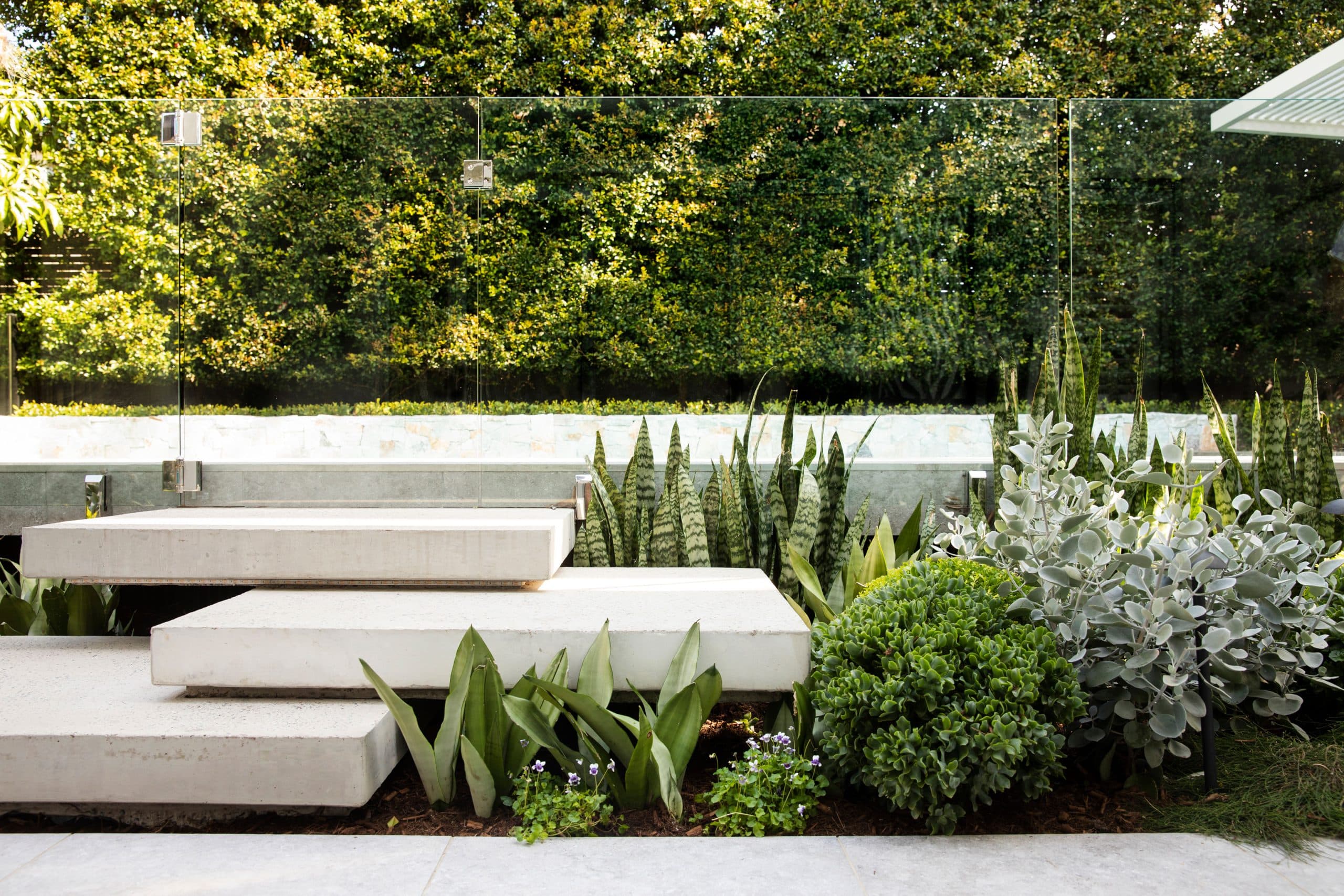
A good garden screen gives you privacy without making the garden feel boxed in. It filters an unwanted view, creates a sense of enclosure and helps the spaces around it feel calm and considered.
A clipped hedge can be exactly the right solution in some gardens. But screening does not have to stop at a single row of identical plants. By combining a dependable background with small trees, shrubs and lower planting, a boundary can become part of the garden rather than simply something that hides what is beyond it.
At Growing Rooms, we usually work with a mix of native and exotic plants. The right combination depends on the architecture, soil, aspect, available space and the feeling we want to create. What matters most is how the plants work together: their heights, forms, textures and performance over time.
Start with the view, not the plant list
Before choosing plants, identify exactly what needs to be screened. Is it a neighbouring window, a second-storey outlook, a busy street, a pool pump or a plain fence?
The position and height of that view will guide the structure of the planting. A low boundary may only need a dense middle layer. An overlooking window may call for the canopy of a well-placed small tree. A long exposed edge might benefit from a hedge or built screen, softened by planting in front.
It is also worth considering where the garden will be seen from. The most important sightline may be from the kitchen, the outdoor dining table, the pool or a favourite chair. Screening is most successful when it is designed from these everyday viewpoints rather than treated as a continuous wall around the entire property.
Let the background do the dependable work
Every layered screen needs a reliable backbone. This might be an existing hedge, a line of upright shrubs, a fence, a masonry wall or a timber screen. Its job is to provide consistent coverage while the planting in front creates character and seasonal change.
At our Maroubra garden, we retained much of the established Lilly Pilly hedge for privacy, then layered a mix of native and exotic species around it. The hedge provides the dependable green background; the varied foliage and forms in front stop it from reading as a flat boundary.

Here, the timber bench beneath the established tree makes the planted boundary part of the outdoor living area. Rather than reading as a separate privacy treatment, the screen becomes the backdrop to a place to pause and enjoy the garden.
Use small trees to interrupt higher views
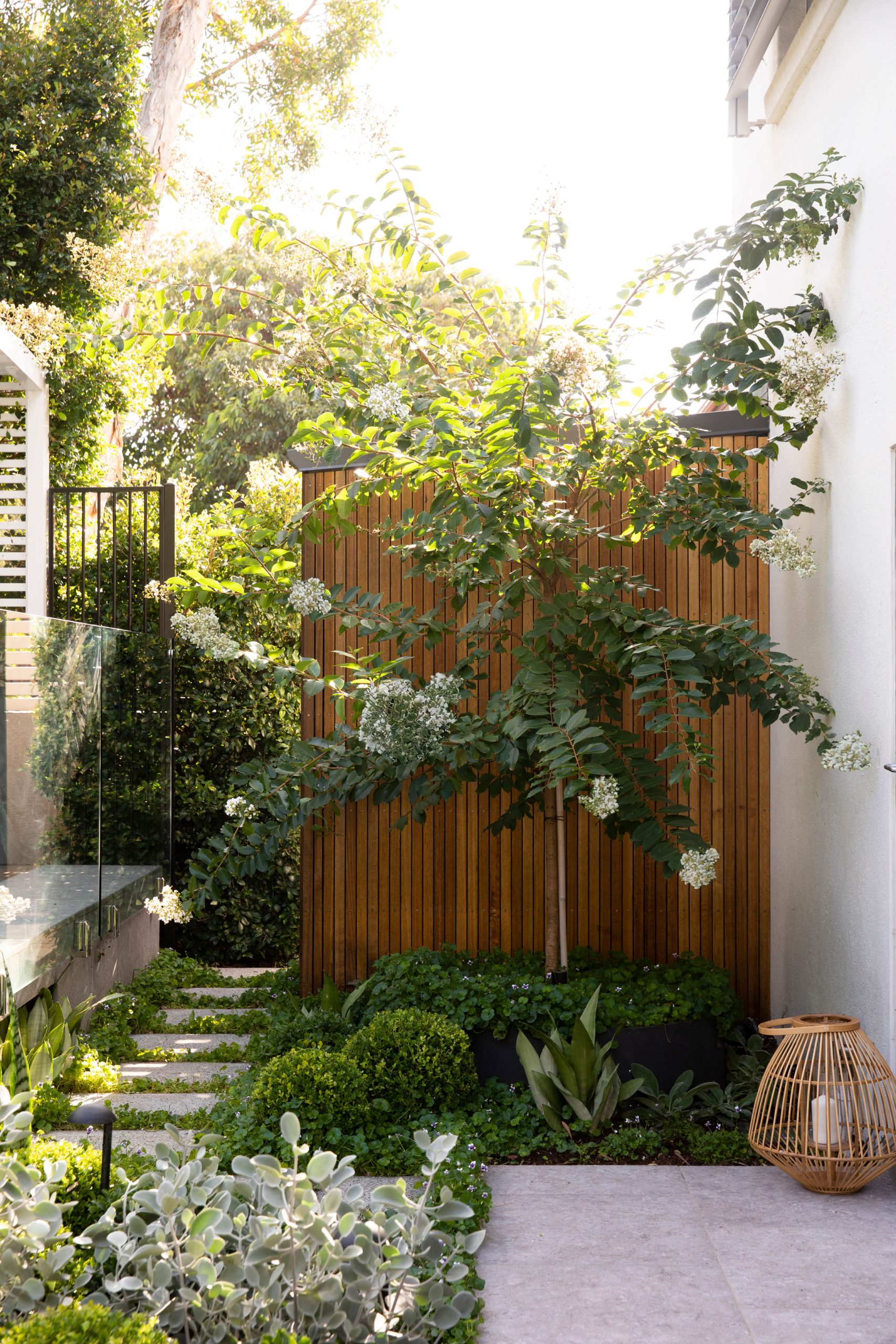
Small trees are one of the most useful tools in a screening garden. Their canopies can filter an elevated sightline while leaving space and light beneath them for other plants.
Depending on the garden, that upper layer might include a Magnolia, Camellia or Crepe Myrtle, or a native Banksia, Tea Tree, Water Gum or compact Eucalypt. Some offer flowers, some bring sculptural trunks and others contribute fine foliage or movement.
The aim is not necessarily to form an unbroken row. A few trees placed where they are genuinely needed can be more effective, and far more beautiful, than planting every boundary at the same height. Always allow for mature canopy size and root space, and check how the tree will relate to buildings, paving, pools and neighbouring properties.
Build density through the middle
The middle layer is where much of the visual weight sits. It fills the space between the tree canopy and the ground, hides gaps in the background and gives the screen a generous, garden-like quality.
Useful shrubs might include Lilly Pilly, Murraya, Viburnum, Camellia, Gardenia or Heliconia, alongside natives such as Tea Tree, Hop Bush, Grevillea, Correa or Westringia. The exact palette will depend on sun, soil, exposure and the style of the garden.
Rather than collecting too many unrelated plants, repeat a limited number through the bed. Repetition gives the planting rhythm and makes a mixed palette feel calm. Varying the leaf size, tone and form within that palette creates depth without visual clutter.
Flowers are a welcome extra, but foliage does most of the work in a screening garden. Think about the contrast between glossy and matte leaves, fine and broad foliage, deep green and silver tones, upright forms and looser shapes. These differences help one layer remain visible against the next.
Soften the base with lower planting
Lower-growing plants are what make a screen feel settled into the garden. They conceal bare stems, soften the edge of paving or lawn and fill the small gaps that are especially noticeable from nearby seating areas.
Lomandra, Liriope, low-growing Correa, compact Westringia, Philodendron, smaller succulents and spreading groundcovers can all play this role in the right conditions. Some provide strappy movement, others rounded foliage or a soft carpet at ground level.

This layer does not need to be deep everywhere. Even a narrow ribbon of planting can soften a hedge or fence. Where there is more room, allowing plants to overlap in loose groups creates a fuller and more natural effect.
Mix plants for the site, not for the label
There is no need to choose between an entirely native or entirely exotic palette. Both can contribute valuable qualities, and many of our gardens combine them.
A native shrub might be selected for its fine foliage, habitat value or ability to handle a difficult exposure. An exotic small tree might provide the exact canopy, flower or seasonal character the space needs. What makes the combination successful is compatibility: the plants should enjoy similar conditions and sit comfortably together in scale, texture and colour.
Before finalising the palette, consider:
- how much direct sun reaches each part of the bed
- drainage and soil depth
- reflected heat from walls and paving
- wind and salt exposure
- the room available at maturity
- access for pruning and maintenance
- whether falling leaves or flowers will affect a pool or entertaining area
Choosing for the conditions makes the screen more resilient and reduces the need to force plants into shapes or sizes that do not suit them.
Layering works in a small garden too
A layered screen does not require a large suburban boundary. In a compact garden, each plant simply has to work harder.
At Surry Hills, a dark rear wall provides a quiet background for a small Japanese Maple, grasses, succulents and lower foliage. The contrast makes the planting feel deeper than it is, while the varied heights create interest without taking over the courtyard.

Espaliered plants, pleached trees and slender upright forms can also be useful where bed width is limited. A climber over a structural screen may provide coverage while leaving room below for softer planting. The important thing is to keep the composition legible rather than squeezing in one of everything.
Design it to look good from both sides
Screening plants often sit along a shared boundary, beside a path or between two garden rooms, so they may be viewed from more than one direction.
Where possible, avoid creating a composition with a clear front and an untidy back. Use plants with attractive natural habits, stagger their positions and allow enough room for each one to develop. If a clipped hedge is part of the design, give it sufficient access for maintenance on both sides.
This matters beyond appearance. Good spacing improves airflow, makes pruning easier and helps prevent one vigorous plant from overwhelming its neighbours.
Plan for establishment and maintenance
A newly planted layered screen will not provide instant density. Trees and shrubs need time to establish their root systems and settle into the site. Buying the largest plants available is not always the best shortcut; well-selected plants in appropriate sizes often establish more successfully and catch up quickly.
Prepare the soil, mulch well and provide consistent water while the plants establish. Drip irrigation can make this easier, especially in a long or narrow boundary bed.
Once established, the aim is to guide rather than constantly control the planting. Selective pruning can maintain sightlines, encourage density and preserve the distinct layers. Avoid clipping every plant into the same shape, or the screen will gradually lose the contrast that makes it interesting.
Make privacy part of the garden
The best garden screening ideas do more than hide a view. They create an outlook of their own.
By combining a reliable background with carefully placed trees, a substantial middle layer and softer planting at ground level, privacy becomes part of the overall garden experience. A considered mix of native and exotic plants can bring year-round structure, seasonal moments, movement and habitat—while still doing the practical job the garden needs.
The result is not simply a screen. It is a layered piece of garden design that feels generous, established and connected to the home.
For more planting inspiration, explore our guide to native groundcovers for Sydney gardens. If you are planning a new garden or reworking an exposed boundary, learn more about our landscape and pool design service or contact the Growing Rooms team.