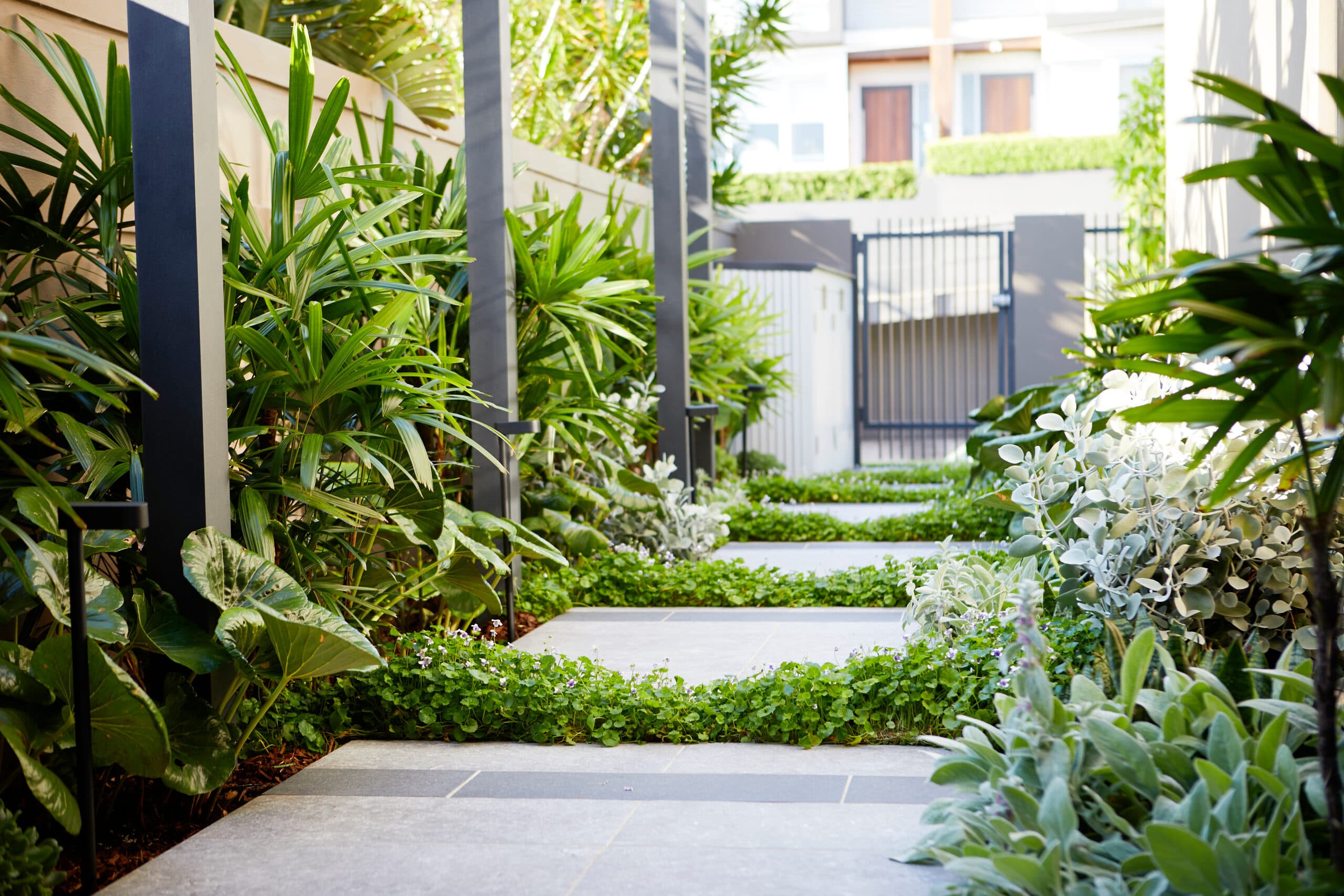
Groundcovers may sit at the lowest level of a planting scheme, but they do some of the hardest work in the garden. They soften paths and retaining walls, cover bare soil, help hold moisture around plant roots and bring a finished, layered quality to the landscape.
Australian native groundcovers are particularly useful in Sydney gardens. They can help reduce erosion, limit weed growth and act as a living mulch. There are varieties for hot coastal sites, dry slopes, shaded areas beneath trees and the narrow spaces between stepping stones. Once established, the right plant can also reduce exposed soil and make it harder for weeds to take hold.
The important words are the right plant. No groundcover will thrive everywhere, and a plant that forms a beautiful carpet in sheltered shade may struggle against reflected heat beside a west-facing wall. Start with the conditions, then choose the plant.
Why use native groundcovers?
Native groundcovers offer much more than a way to fill an empty space. In a well-designed garden, they can:
- soften the transition between planting and paving
- spill over retaining walls and the edges of raised garden beds
- help stabilise soil on banks and sloping sites
- shade the soil and reduce moisture loss
- create habitat and seasonal food for insects and small birds
- replace small or difficult areas of lawn
- connect larger shrubs, grasses and trees into one cohesive planting scheme
They are also an effective way to bring movement and detail into a garden without blocking views. Low planting alongside a path or driveway can make the space feel wider, while a repeated carpet beneath trees allows their trunks and forms to remain visible.
How to choose the right native groundcover
Before choosing a plant, look closely at the site. How many hours of direct sun does it receive? Is the soil sandy and free-draining, or heavier and slow to dry? Will the plant need to tolerate salt-laden wind, reflected heat, tree-root competition or occasional foot traffic?
It is equally important to check the plant’s mature spread. A vigorous groundcover can be wonderful on a broad bank, but overwhelming beside a narrow path. A delicate native violet is ideal in cool, moist shade, but is not the right choice for an exposed, dry slope.
Rather than mixing many varieties in a small bed, we generally prefer to repeat one groundcover in generous groups. This creates a calmer, more resolved landscape and allows the foliage to form a continuous layer around feature plants.
Our favourite native groundcovers for Sydney gardens
1. Kidney Weed (Dichondra repens)
Despite its common name, Kidney Weed is a desirable Australian native with small, rounded leaves and a soft, lawn-like appearance. It spreads by creeping stems and performs especially well in sheltered areas with some shade and reliable moisture.
This is one of our favourite choices between stepping stones or beneath open-canopied trees. It can tolerate occasional, light foot traffic, making it useful where conventional lawn is patchy or difficult to mow. It is not a substitute for hard-wearing turf in a busy play area, and it will look its best when protected from hot afternoon sun and allowed to establish evenly.
Best for: part shade, stepping-stone joints, sheltered courtyards and low-traffic lawn alternatives.
2. Native Violet (Viola banksii, often sold as Viola hederacea)
Native Violet creates a fresh green carpet beneath trees and in other cool, shaded parts of the garden. Its small white and violet flowers appear above rounded leaves, bringing a gentle layer of colour to spaces that can otherwise feel dark or bare.
In our designs, we often combine Native Violet with Kidney Weed rather than relying on a single species. Their slightly different growth patterns and seasonal performance help create a fuller, more resilient groundcover carpet that continues to look good throughout the year.

It prefers moisture-retentive soil and can spread enthusiastically when conditions suit it. We like using it around tree trunks, beside shaded paths and beneath taller shrubs, where it creates a natural woodland character. It is less suited to dry shade with intense root competition unless the soil and irrigation have been carefully considered.
Best for: moist shade, beneath trees and shrubs, and sheltered garden edges.
3. Creeping Boobialla (Myoporum parvifolium)
Creeping Boobialla is one of the most useful native groundcovers for sunny Sydney gardens. Its fine foliage forms a low, spreading mat, dotted with small white or pale pink flowers through the warmer months.

It is well suited to open garden beds, embankments and the edges of paths, where its dense growth can cover bare soil and help reduce erosion. It can also spill attractively over low retaining walls. Depending on the form and conditions, a single plant can spread well beyond a metre, so allow it room rather than crowding it against paving.
Best for: full sun to part shade, broad garden beds, slopes and retaining-wall edges.
4. Mundi™ Westringia (Westringia fruticosa ‘WES05’)
Mundi is a low, spreading form of coastal rosemary with fine grey-green foliage and small white flowers. It grows higher than a true ground-hugging carpet, creating a softly mounded layer that suits both contemporary and naturalistic gardens.

This is an especially useful choice for exposed Sydney sites. It tolerates coastal wind, periods of dry weather and a range of well-drained soils. Mass planted beside a driveway, through a front garden or above a retaining wall, it gives the landscape structure without the maintenance demands of a tightly clipped hedge.
Best for: coastal gardens, sunny or partly shaded beds, low borders and contemporary mass planting.
5. Meema™ Hardenbergia (Hardenbergia violacea ‘HB1’)
Meema is a shrubby groundcover form of the familiar native sarsaparilla. It forms a broad mound of clean green foliage and produces masses of purple pea flowers from winter into early spring, when colour in the garden can be especially welcome.

It works well on slopes and in larger beds, where its foliage can spread beneath taller planting. Unlike the climbing form of Hardenbergia, Meema has been selected for a tidier groundcover habit, although it may still climb if it finds support. An annual prune after flowering will help maintain its shape.
Best for: full sun to semi-shade, slopes, larger beds and winter colour.
Planting native groundcovers successfully
Even drought-tolerant plants need regular watering while their root systems establish. Prepare the soil before planting, water deeply and use a suitable mulch between young plants while they grow together. Keep mulch clear of stems and avoid piling it against trunks or crowns.
Spacing is also important. Planting too far apart leaves bare ground exposed for longer; planting too closely can create unnecessary competition and poor airflow. Use the expected mature width—not the size of the nursery pot—to calculate quantities.
Weeds should be removed before planting and controlled during establishment. As the groundcover closes over, it will shade more of the soil and reduce opportunities for new weeds, but no planting scheme is completely maintenance-free. Occasional trimming, weeding and replenishing mulch will keep the area looking considered rather than overgrown.
When feeding native plants, choose a low-phosphorus fertiliser formulated for Australian species and follow the label carefully.
Designing a layered native garden
The strongest groundcover planting is rarely designed in isolation. Combine low carpets with the upright form of native grasses, the structure of shrubs and the canopy of small trees. Repeating the same groundcover through these layers ties the garden together and gives individual feature plants room to breathe.
For a sunny coastal garden, a sweep of Mundi Westringia can sit beautifully beneath sculptural grasses and banksias. In a shaded garden, Native Violet and Kidney Weed can combine to create a softer, more persistent floor beneath tree ferns, correas and established trees. On a broad sunny slope, Creeping Boobialla or Meema Hardenbergia can be punctuated with taller flowering shrubs to add height, habitat and seasonal colour.

The result should feel generous and natural, while still being clearly designed.
If you enjoyed this guide, you may also like our article on native grasses for the Australian garden. For help developing a planting palette suited to your site, explore our landscape and pool design service or speak with the Growing Rooms team.