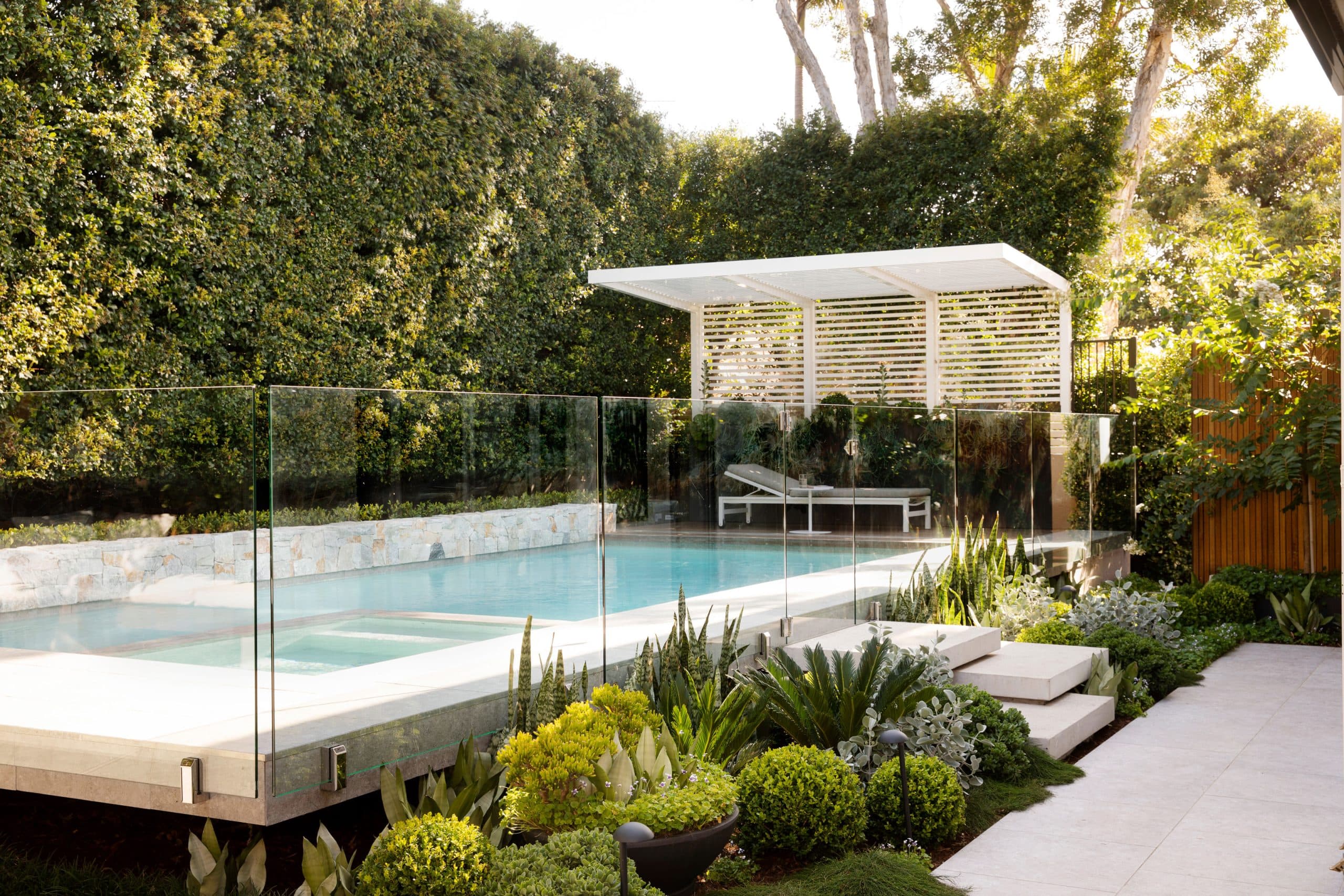
Planning a new garden often begins with ideas: a pool, an outdoor entertaining area, more privacy, better access or simply a greener outlook from the house. Before any of those ideas can become a design, however, there is an important practical question to answer: how much should you budget?
One useful starting point is the value of your home. As a general guide, allowing 5–10% of the property's value for a professionally designed and constructed landscape can create a realistic framework for an extensive garden renovation. This commonly cited range appears in Australian landscaping guidance from both realestate.com.au and hipages.
It is only a guide. Property value does not determine what a garden will cost, and investing 10% does not guarantee an equivalent increase in resale value. What it can do is help establish a level of investment that feels proportionate to the home before the design and construction details are known.
Garden renovation budgets based on property value
The table below applies the 5–10% guide to a selection of property values. It is intended as an early planning tool, not a quotation.
| Approximate property value | 5% guide | 10% guide | Initial planning range |
|---|---|---|---|
| $1.5 million | $75,000 | $150,000 | $75,000–$150,000 |
| $2 million | $100,000 | $200,000 | $100,000–$200,000 |
| $3 million | $150,000 | $300,000 | $150,000–$300,000 |
| $4 million | $200,000 | $400,000 | $200,000–$400,000 |
| $5 million | $250,000 | $500,000 | $250,000–$500,000 |
| $7 million | $350,000 | $700,000 | $350,000–$700,000 |
All figures include GST and are general examples only. Every property, design and construction scope is different.
These figures may initially appear high if you are thinking mainly about plants. A complete landscape renovation, however, can involve far more than planting. Demolition, excavation, drainage, retaining walls, paving, decking, lighting, irrigation, carpentry, a pool, a spa or an outdoor room can all form part of one integrated project.
The value of the percentage guide is not that every homeowner should spend within it. Its value is that it prompts an early, honest conversation about the relationship between the property, the desired result and the work required to achieve it.
What can you achieve at different investment levels?
Under 5%: a targeted garden improvement
Spending less than 5% of the home's value can be entirely appropriate when the existing structure of the garden is sound. Rather than rebuilding everything, the project might focus on the elements that will make the greatest difference.
This could include:
- renewing tired planting
- improving lawns and garden beds
- adding irrigation or garden lighting
- creating a defined entertaining area
- replacing an area of paving
- improving privacy with layered planting
- retaining and working around mature trees or sound existing structures
A targeted project can still transform how a garden looks and feels. Careful design is important because the new work needs to sit naturally alongside what remains.
Between 5% and 10%: a complete landscape transformation
For many substantial garden renovations, the 5–10% range provides room for a more cohesive design-and-build approach. Depending on the site and brief, the scope may include:
- redesigning the front and rear gardens
- a pool or spa
- demolition and site preparation
- new levels, steps or retaining walls
- drainage and irrigation
- paving, decking or other hard landscaping
- an outdoor entertaining area
- custom seating, screening or joinery
- lighting and a complete planting scheme

This does not mean every item will fit into every budget. A level, accessible site with valuable existing elements may allow more of the investment to be directed towards finishes and planting. A steep or difficult site may require a larger share to be spent below ground or on structural work.
Above 10%: complex sites and lifestyle-led projects
There are circumstances where investing more than 10% is appropriate. A highly detailed outdoor environment can effectively extend the living space of the home and change how the property is used throughout the year.
Budgets can move beyond the general guide when a project includes extensive excavation, a new pool and spa, a cabana, an outdoor kitchen, major level changes, premium natural stone, mature specimen planting or substantial engineering and approval requirements.
This is not automatically overcapitalisation. Someone preparing a home for sale will evaluate the investment differently from a family planning to enjoy the property for another 15 or 20 years. Privacy, daily use, entertaining, shade and a stronger connection between the house and garden all have value, even when that value cannot be reduced to a future sale price.

What determines the real cost of a garden renovation?
Two gardens of a similar size can have very different construction costs. The following factors usually have more influence on the final price than the property's value alone.
The project scope
A planting renewal is fundamentally different from a full landscape transformation. Pools, spas, decks, covered outdoor rooms, kitchens, built-in seating and new boundary treatments increase both the number of trades involved and the complexity of coordinating the work.
Site access
Good access allows machinery and materials to move efficiently. On a narrow Sydney block, soil, stone and waste may need to be carried by hand through a side passage or even through the house. Restricted access adds time and labour at almost every stage.
Slope, soil and existing levels
Sloping gardens may need excavation, engineered retaining walls, stairs and carefully planned drainage. Soil type also matters. A site that appears straightforward from the surface may require additional preparation before structures, paving or planting can be installed correctly.
Materials and finishes
Natural stone, premium timber and bespoke metalwork create a different level of finish from standard concrete or off-the-shelf products. Neither approach is automatically right or wrong. The important thing is to select materials that suit the architecture, intended use and overall budget.

Plant size and maturity
Younger plants are more economical and often establish readily, but they take time to fill out. Advanced trees, hedges and feature specimens create greater immediate impact and privacy, with a corresponding effect on supply, transport and installation costs.
Consultants and approvals
Depending on the project, the budget may also need to cover surveyors, engineers, arborists, planners, certifiers and council or approval fees. These services are especially relevant when the design includes pools, significant structures, retaining or work near protected trees.
Why every garden renovation needs a contingency
Even a carefully investigated and documented project can reveal conditions that were impossible to see before construction began.
Excavation for a pool may uncover rock. Demolition may expose an old drainage problem. Previous building work may have left concrete, rubble or other waste buried beneath the garden, which then needs to be removed and disposed of correctly.
A contingency allowance provides a buffer for these unforeseen conditions. The appropriate amount depends on the site, the proposed work and how much can be established before construction. It should be discussed during the design and quotation process rather than added as a generic percentage without considering the property.
Contingency is not a substitute for thorough planning. It works alongside site investigation, detailed documentation and transparent quoting to help the project respond sensibly if something unexpected is found.
Should you spend the same amount if you plan to sell?
Not necessarily. If you expect to sell soon, the priority may be presentation rather than complete reinvention. Healthy planting, a welcoming entrance, well-defined outdoor areas and repaired or refreshed existing surfaces can improve the impression of the property without rebuilding the entire garden.
For a long-term home, the calculation is broader. You may place greater value on a pool for the family, a shaded dining space, privacy from neighbours or a garden that can be enjoyed from inside the house. In that situation, the return is partly financial and partly the accumulated value of using the space for many years.
It is wise to avoid treating landscaping as a guaranteed equation. A well-designed garden can strengthen street appeal, improve the relationship between indoors and outdoors and make a home more enjoyable. It cannot guarantee that the entire construction cost will be added to the eventual sale price.
Where should you invest first?
When the wish list is larger than the available budget, we recommend protecting the parts of the project that are difficult or costly to change later.
Start with a strong overall design. Resolve levels, drainage, access and the relationship between the home, pool and primary outdoor living area before concentrating on decorative details. Good planning allows the most important structural work to be completed correctly and helps identify elements that could be simplified or staged.
Planting should not be treated as whatever is left after construction. Trees, screening, shade and layered greenery are what turn a collection of built elements into a garden. A clear planting framework also improves with time, giving the landscape a sense of maturity that cannot be installed overnight.

Can a garden renovation be completed in stages?
Yes, provided the stages are based on one complete plan. Designing the whole landscape first helps ensure that early decisions do not create problems or unnecessary costs later.
For example, drainage, underground services and major level changes may need to be resolved before paving and planting. Future pool access may also need to remain clear. A staged approach works best when each phase feels complete while still supporting the next.
How Growing Rooms approaches garden renovation budgets
At Growing Rooms, we discuss budget early in the landscape and pool design process. This helps us understand which parts of the brief matter most and develop a design that is both ambitious and achievable.
Every garden is unique. We do not assume that a property of a certain value needs a particular list of features or a fixed level of finish. We consider the architecture, site conditions, existing landscape, lifestyle and priorities, then work towards the client's budget.
Once the design is developed, an itemised construction estimate provides a clearer picture of where the investment lies. It also makes it easier to refine materials, adjust scope or plan stages without losing the central idea behind the garden.
If you are considering a garden, pool or complete outdoor transformation in Sydney, contact the Growing Rooms team to discuss your property, priorities and preferred investment range.
Frequently asked questions
Is 5–10% of a home's value a realistic garden renovation budget?
It can be a useful starting point for a professionally designed and constructed landscape, but it is not a rule or quotation. The appropriate budget depends on the site, desired scope, materials, structures and existing elements that can be retained.
Does a pool count as part of the garden renovation budget?
Yes. When using the percentage as an overall planning guide, a pool can be included. Pool excavation, engineering, finishes, equipment, fencing and the surrounding landscape can represent a significant portion of the total investment.
What parts of landscaping generally cost the most?
Excavation, retaining, drainage and major hard landscaping can consume a substantial part of the budget. Pools, outdoor structures, difficult access, premium materials and bespoke details can also increase the cost significantly.
Will landscaping add the full project cost to my home's value?
There is no guaranteed return. A well-designed garden may improve street appeal, outdoor living and the overall presentation of a property, but eventual resale value also depends on the market, location, workmanship and what buyers value at the time.
How much contingency should I allow?
There is no single figure suitable for every garden. The allowance should reflect the site and construction scope, particularly where excavation, demolition, retaining or pool construction may reveal hidden conditions. Your designer and construction team can recommend an appropriate buffer once the project is better understood.